
You got an invitation to an Indian wedding? Congrats! It’s quite the party, lasting a between 2-7 days. Guess what, you can’t wear the same outfit everyday, not even a similar color. This is my first time attending an Indian wedding and I’m gonna discuss two tradtional Indian garments for the ladies to wear during events. I’m a person of non-Indian decent, and writing this guide from a westernized perspective to share what I’ve learned about the ladies’ Indian garments. Here’s a quick bullet point summary of what I’ve learned before I dive into the descriptions/work on the garments themselves:
- Buying the outfit requires post stitching (more than you can imagine).
- Every dress/saree/lenhenga are all custom made to fit one particular person.
- The blouse is basically a crop top and is called a choli.
- If you’re wearing a silk saree, you want to pick a blouse with not so much embellishments because it can catch, and cause the saree to fray.
- Can’t wear white, black or red to the wedding.
- Sarees need to have a fall for it to drape properly.
- Exposing your belly button is optional.
The Saree
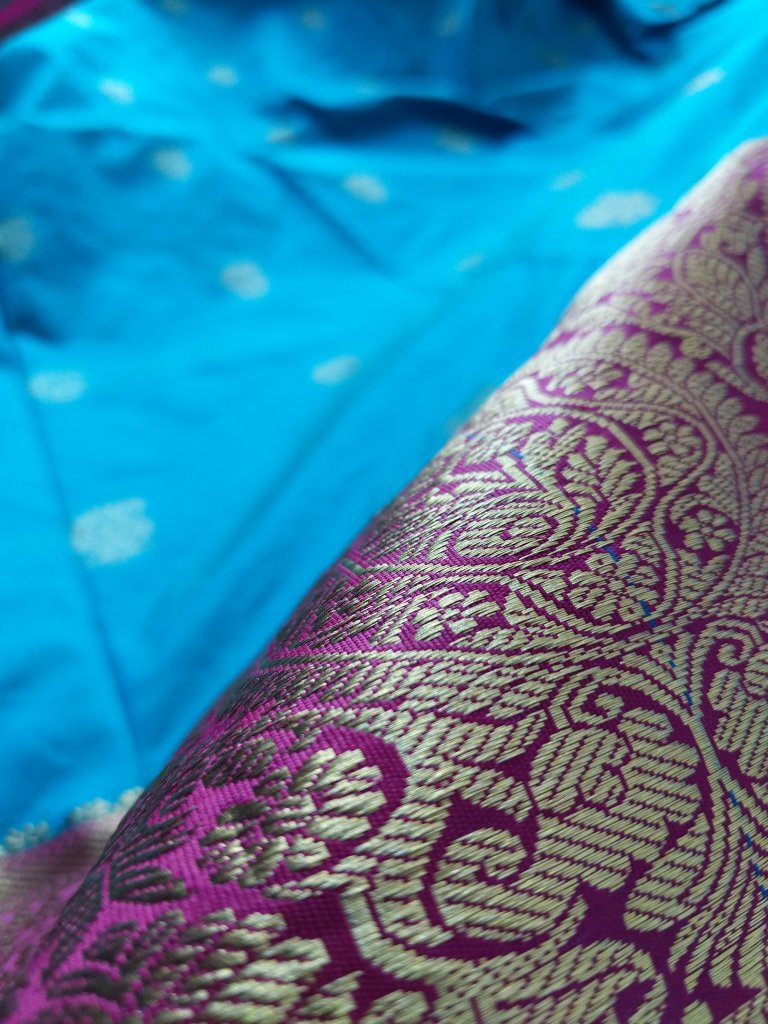
Everyone is familiar with the saree. It’s a 5+ meter long beautifully embroidered (depends on what part of India you’re from) piece of unstitched cloth that you wrap and drape so majestically over yourself. You think it’s easy to just buy one online and it comes to you pre-made with the blouse, nope… It comes out of the package as one long 5-meter cloth, with 0.8m at the end reserved to make the blouse. You’ll need to do lots of hemming, get a saree peticoat, and stitching before the outfit is ready to wear. Here’s what you have to do before you can put it on.
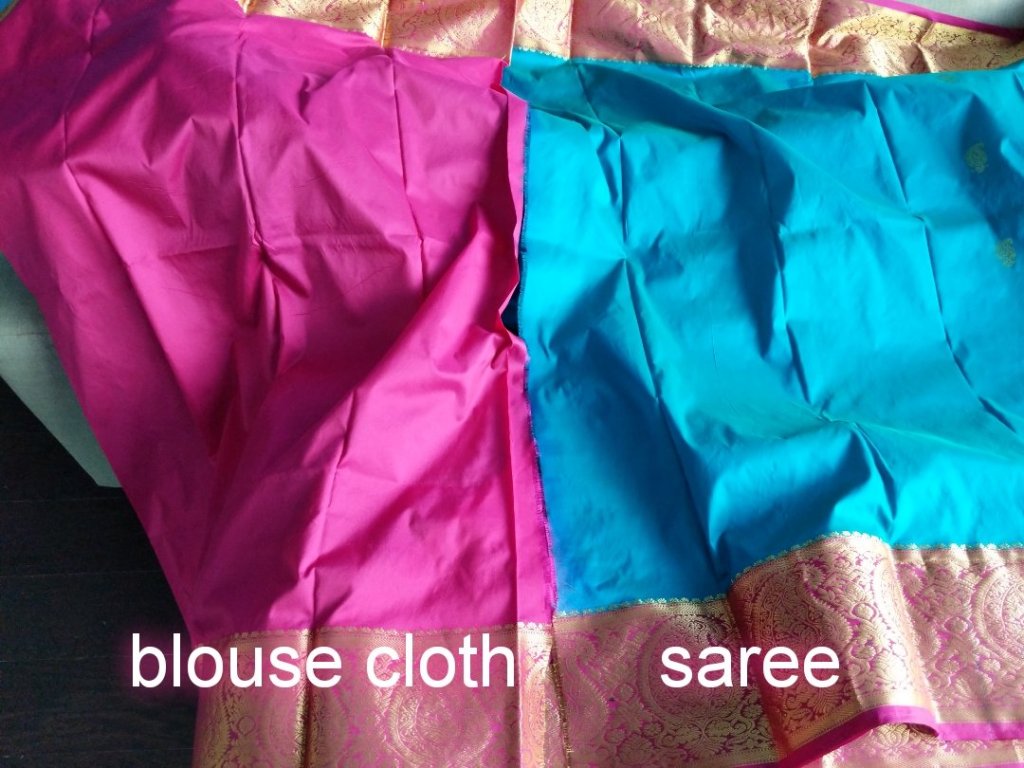

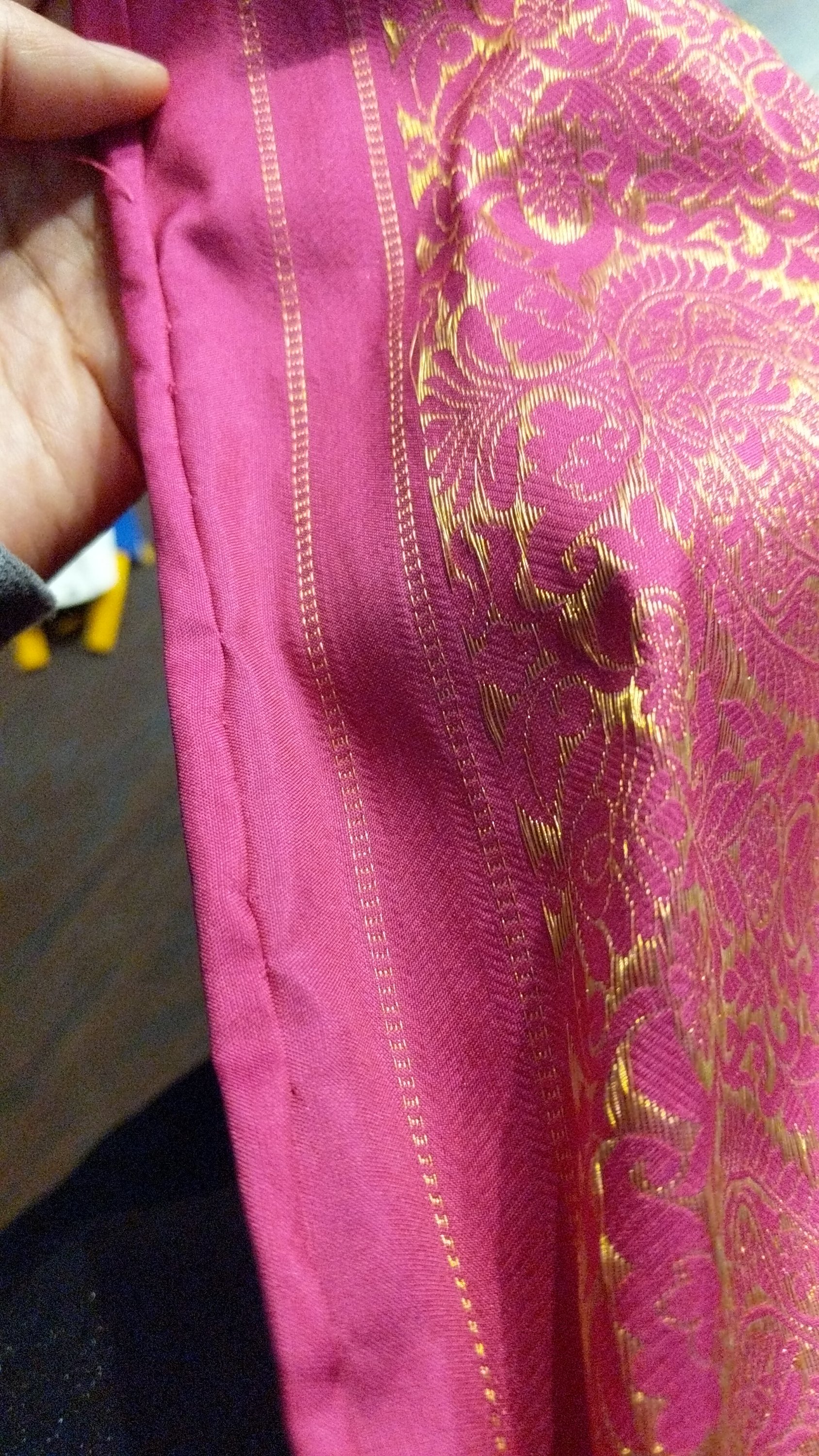
Can you wear your saree without a fall? If it’s a rush one day thing then maybe, but if your saree is made of silk or some other expensive material, then no, you must attach the fall before wear it. The fall is meant to give it some weight, it allows the pleats to be more distinct when you’ve got it worn, as well as protect the boarder from your shoes and the dirt from the floor.

The Choli
The choli is the blouse piece. Fun fact, Indian women used to wear the saree bare breasted. The way it was wrapped already covered up their breasts, but it wasn’t until the British showed up, they weren’t a fan, so the choli blouse was added to the saree dress.
The choli is the hardest part of all of indian tradtional wear because it requires precise measurements of your torso. It’s never pre made because every woman’s size is different and it always needs to be customized. Also the frabric isn’t stretchy so there’s no play in the size, it’s gotta fit you perfectly. I’ve sent my lenhenga choli out to get made by an indian professional tailor in my city and it’s still not fitting right. I might take up the challenge next time and do it myself.
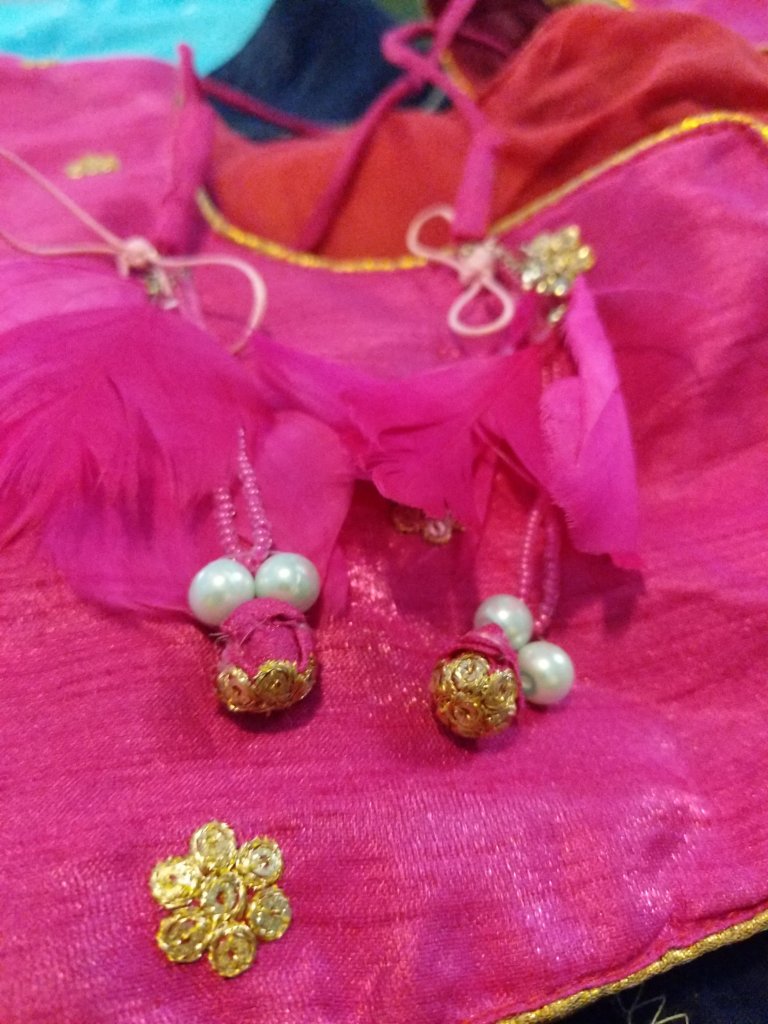
I think the funnest part of the choli design are the tassles ties in the back. I decided to make my own. The tassle ties serve the purpose of keeping the sleeves from slipping off your shoulders and you can customize them many ways. They’re similar to the tassles that you attach to your lenhenga skirt tie. They’re just fun to accessorize!
The Lehenga
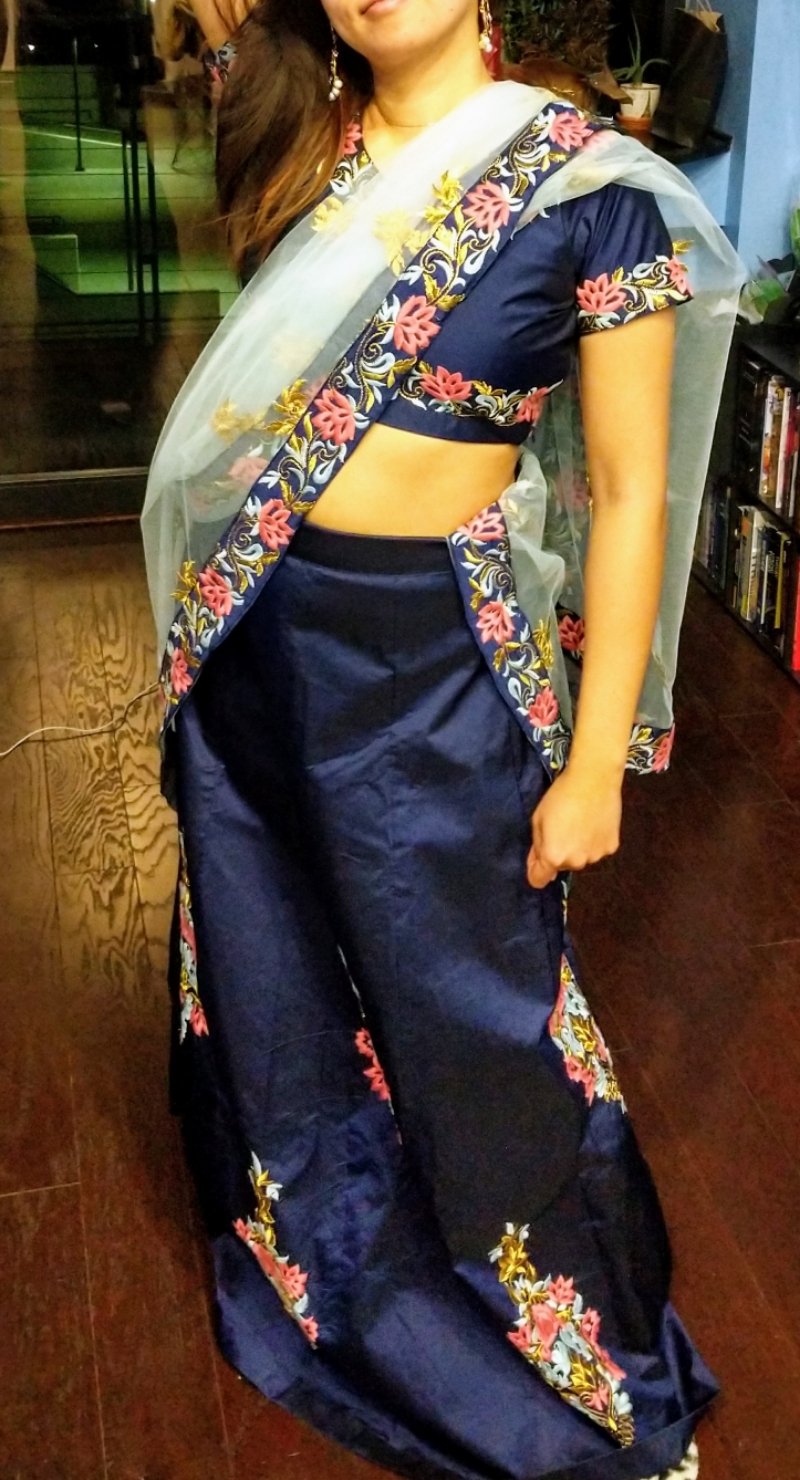
The Lehenga is basically a long floor length skirt and a choli blouse and a short scarf to wrap around yourself. Lenhengas are very popular to wear at weddings especially at a sangeet (which is a bollywood dance party where guests preform for the couple). I ordered mine from Indian wedding sarees.com and it came like this:

I sent both the choli and Lehenga in to a professional Indian tailor to stitch. They added a zipper for both pieces. The cloths didn’t come with lining so the tailor had to add that to these pieces too. Theres a drawstring piece on the skirt that you can customize the tassles so that’s fun. I’ve haven’t had a chance to customize it yet but I think I might buy one in India. The tassles on the lenhenga are larger than the ones used for the choli.
But wait, there’s more clothing!
Theres so many more different types of Indian garments/clothing types but I’m just covering the 2 more common types in this post, the saree and the lehenga. The silk saree is the best standard you’re supposed to wear to a south Indian wedding. Depending on what part of India you’re in, they drape their saree differently and wear other types of clothing that have other names. I’m not going cover them in this post because that’s a whole another world that I need to learn about. In the meantime, you’re well equipped to know how to prep a saree before draping. Now you gotta learn how to drape it, and there’s YouTube for that. Now I’m off to India.
 Darkaqua Chronicles